CPAP Use: Understand Your VA Sleep Apnea Rating
"Learn how CPAP compliance impacts your VA sleep apnea rating and why proving device usage is crucial for securing higher benefits."
━━━THE VETERAN'S TAKE━━━
Why the 50% Rating Isn't Automatic, and How Usage Data Decides Your Pay
Most veterans with sleep apnea leave money on the table because they don't understand that the 50% rating is tied to using a CPAP, not just owning one, and that the VA can reduce ratings if usage data shows noncompliance, while 30% and lower ratings depend on proving chronic daytime hypersomnolence or respiratory failure symptoms that Compensation and Pension (C&P) examiners rarely ask about directly. The difference between 30% and 50% is $580.43 every month in 2026, and it hinges entirely on whether you can prove device use or document specific daytime symptoms the VA almost never probes for.What Diagnostic Code 6847 Actually Says, and What Most Veterans Miss
Diagnostic Code 6847 governs all obstructive sleep apnea ratings. It assigns 100% for chronic respiratory failure with carbon dioxide retention or cor pulmonale, 50% for use of a breathing assistance device such as continuous airway pressure (CPAP) machine, 30% for persistent daytime hypersomnolence, and 0% for documented sleep apnea without those criteria. The problem: most veterans never see the exact regulatory language defining "persistent daytime hypersomnolence" as a compensable symptom. They assume the sleep study alone justifies 30% or that owning a CPAP guarantees 50%. Neither is true. The 50% rating requires "use" of a CPAP. Not prescription. Not purchase. Use. The VA's compliance monitoring through SD card data means veterans who own but inconsistently use CPAP risk reduction proposals, especially during routine future examinations under 38 CFR § 3.327. If your DME supplier's download report shows 40% nights under four hours of use, you're not meeting the clinical definition of compliance, and the VA will notice during your next exam.The $580.43 Question: Proving CPAP Use Versus Daytime Symptoms
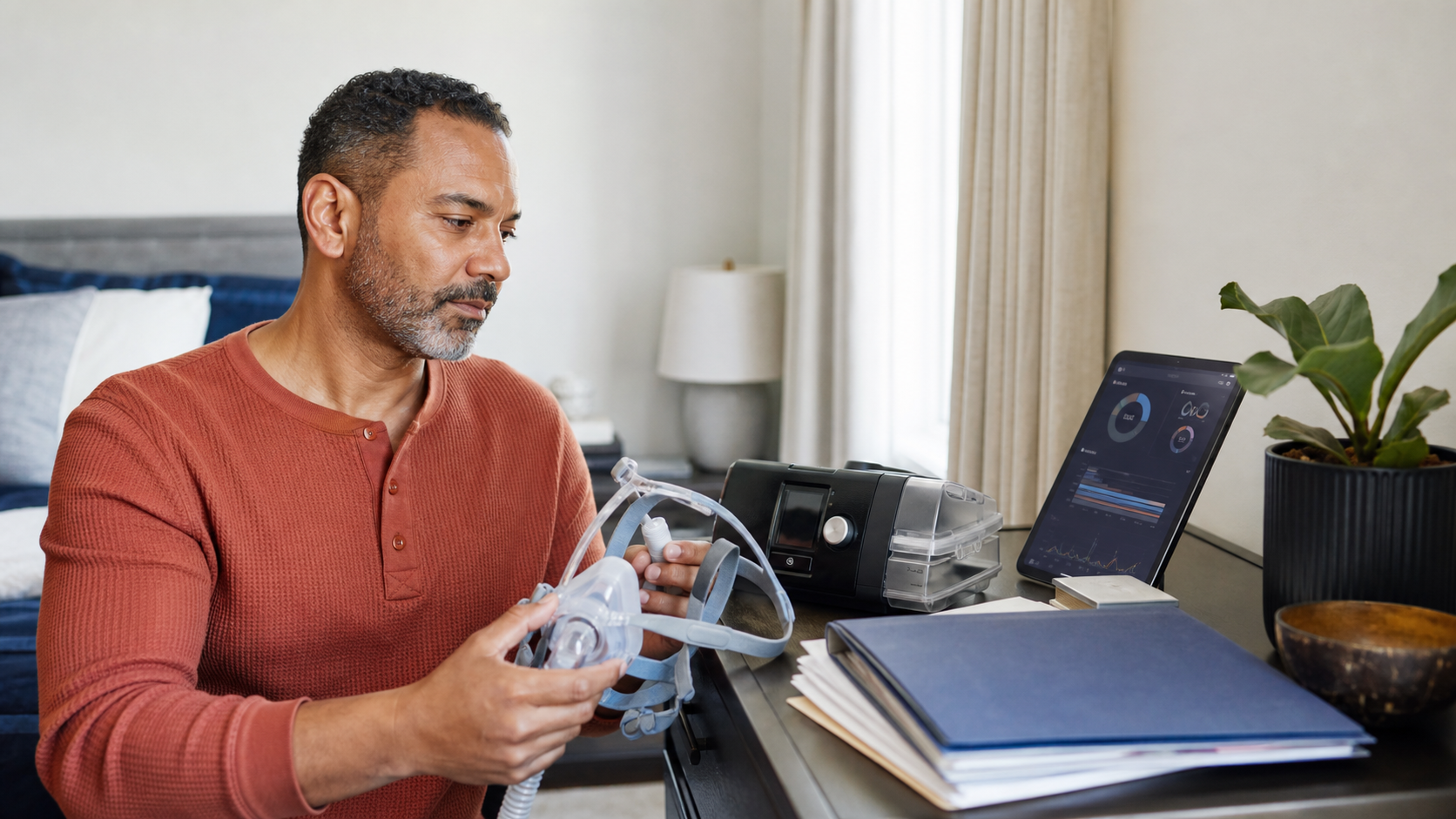
In 2026, a 30% rating pays $552.47 monthly. A 50% rating pays $1132.90. That $580.43 monthly difference turns entirely on proving CPAP use versus daytime symptoms. Yet many veterans file increase requests without understanding which criterion they're actually arguing for or providing compliance download reports from their DME supplier. If you're using CPAP consistently, meaning at least four hours per night on 70% or more of nights over a 30-day period, you need to submit compliance data with your claim. Request a detailed usage report from your DME provider or pull the data directly from your machine's SD card. The VA won't assume you're compliant just because you were prescribed a device three years ago. C&P examiners will ask if you use it, and they'll note your answer. If you say yes but can't prove it, expect a reduction proposal or a denial on increase.How to Document Persistent Daytime Hypersomnolence When You Don't Use CPAP
Veterans rated at 30% for daytime hypersomnolence must document it through lay evidence, work performance issues, or secondary mental health impacts. C&P examiners typically ask "Do you use a CPAP?" but rarely probe for Epworth Sleepiness Scale scores, napping frequency, or occupational impairment that would justify the 30% tier without device use. If you're not using a CPAP, whether because you can't tolerate it, you're still waiting on equipment, or you're managing symptoms another way, you need to argue for 30% based on hypersomnolence. That means documenting how excessive daytime sleepiness affects your daily life. Write a personal statement that includes: - How many times per day you nap or feel compelled to nap. - Whether you've fallen asleep during meetings, while driving, or during conversations. - Whether your employer has documented performance issues related to fatigue or alertness. - Whether you've been diagnosed with secondary conditions like depression or anxiety worsened by chronic fatigue. Buddy statements from coworkers, spouses, or friends who've observed your daytime sleepiness carry weight. So do medical records noting hypersomnolence as a clinical finding. The VA won't connect these dots for you. You have to build the record.The Compliance Trap: How Future Exams Can Reduce Your Rating
Once you're rated at 50%, the VA can schedule routine future exams under 38 CFR § 3.327 to verify continued entitlement. If the examiner documents that you're no longer using CPAP, or that your usage data shows noncompliance, the VA can propose a reduction to 30%, 0%, or even severance if they determine your apnea is no longer compensable. Take Sergeant Torres. He was granted 50% for sleep apnea in 2019 based on CPAP prescription. In 2024, the VA scheduled a routine exam. The examiner asked if he still used his CPAP. Torres said he'd stopped using it two years earlier because it gave him headaches. The examiner documented noncompliance. Three months later, Torres received a proposed reduction to 0% because he didn't argue for hypersomnolence and had no respiratory failure symptoms. He appealed, submitted lay evidence of daytime sleepiness and napping, and eventually secured 30%--but he lost 20 months of back pay during the appeal. If you stop using your CPAP, file for an increase to 30% based on hypersomnolence before your next exam. Don't wait for the VA to discover noncompliance and propose a reduction.When to Argue for 100%: Respiratory Failure and Cor Pulmonale
The 100% rating under DC 6847 requires chronic respiratory failure with carbon dioxide retention or cor pulmonale. This is rare. You need pulmonary function tests showing elevated CO2 levels or echocardiogram findings of right-sided heart failure caused by sleep apnea. Most veterans with obstructive sleep apnea won't meet this threshold. But if you've been hospitalized for respiratory failure, if you're on supplemental oxygen, or if your cardiologist has documented cor pulmonale secondary to sleep apnea, you should be arguing for 100%. Don't assume the VA will notice. You need to submit the diagnostic evidence and explicitly request the higher rating.What to File, and When
If you're filing an initial claim for sleep apnea, submit your sleep study results, CPAP prescription, and compliance data if you're using the device. If you're not using CPAP, submit a personal statement detailing daytime hypersomnolence and any lay or medical evidence supporting it. If you're filing an increase, decide which criterion you're arguing for. If it's continued CPAP use, submit updated compliance reports. If it's worsening hypersomnolence, submit new lay evidence, work performance documentation, or records of secondary mental health conditions worsened by fatigue. Our book, "A VA Disability Claims Manual for the Rest of Us", includes a full evidence checklist for sleep apnea claims and a template personal statement that walks you through documenting both CPAP compliance and daytime symptoms. It's designed to help you file correctly the first time, so you don't lose months to appeals because you didn't know what the VA needed to see.Bottom Line
The 50% rating isn't automatic just because you own a CPAP. You have to prove you're using it, and the VA will check. If you're not using it, you need to document persistent daytime hypersomnolence before your next exam, or you risk a reduction. The $580.43 monthly difference between 30% and 50% in 2026 depends entirely on which criterion you can prove. Build the record now. Don't wait for the VA to figure it out for you.
About FWD Assist HQ
J. Erickson is a service-disabled Air Force veteran. He served as a military firefighter and as a veteran service officer, where he spent years walking veterans through the same claims process he writes about now. He holds an MBA and writes plain-language guides for veterans who want to understand the system without a translator. Learn more about the mission.
Educational Content Only: This article is for educational purposes only and does not constitute legal or professional claims advice. If you need help with your VA claim, start by contacting your local Veterans Service Organization (VSO) -- they're free, accredited, and can represent you through the entire process. If your situation requires more specialized support, consider consulting an accredited VA attorney or claims agent.
Explore the Upcoming Library
200+ pages of step-by-step VA claim strategies, templates, and 38 CFR citations. Everything you need to file with confidence.
Related Condition Guides
From the VA Condition Library
Cardiovascular / Respiratory
Obstructive Sleep Apnea
Obstructive sleep apnea (OSA) is a condition in which the airway repeatedly collapses during sleep, causing the veteran to stop breathing dozens to hundreds of times per night.
View GuideCardiovascular / Respiratory
Asthma and Respiratory Conditions
Respiratory conditions rated by the VA include asthma, chronic bronchitis, chronic obstructive pulmonary disease (COPD), constrictive or obliterative bronchiolitis, pulmonary fibrosis, interstitial lung disease, sarcoidosis, and others.
View GuideMental Health
Major Depressive Disorder (MDD)
Major depressive disorder is a clinical diagnosis characterized by persistent depressed mood, loss of interest in activities that once mattered, changes in sleep and appetite, fatigue, difficulty concentrating, feelings of worthlessness, and in severe cases, thoughts of death or suicide.
View Guide