VA Treatment Records: Boost Your Disability Claim Evidence
"Your VA treatment records are already in the system -- but most veterans never use them strategically. Here is how to pull them, read them, and put them to work in your disability claim."
━━━THE VETERAN'S TAKE━━━
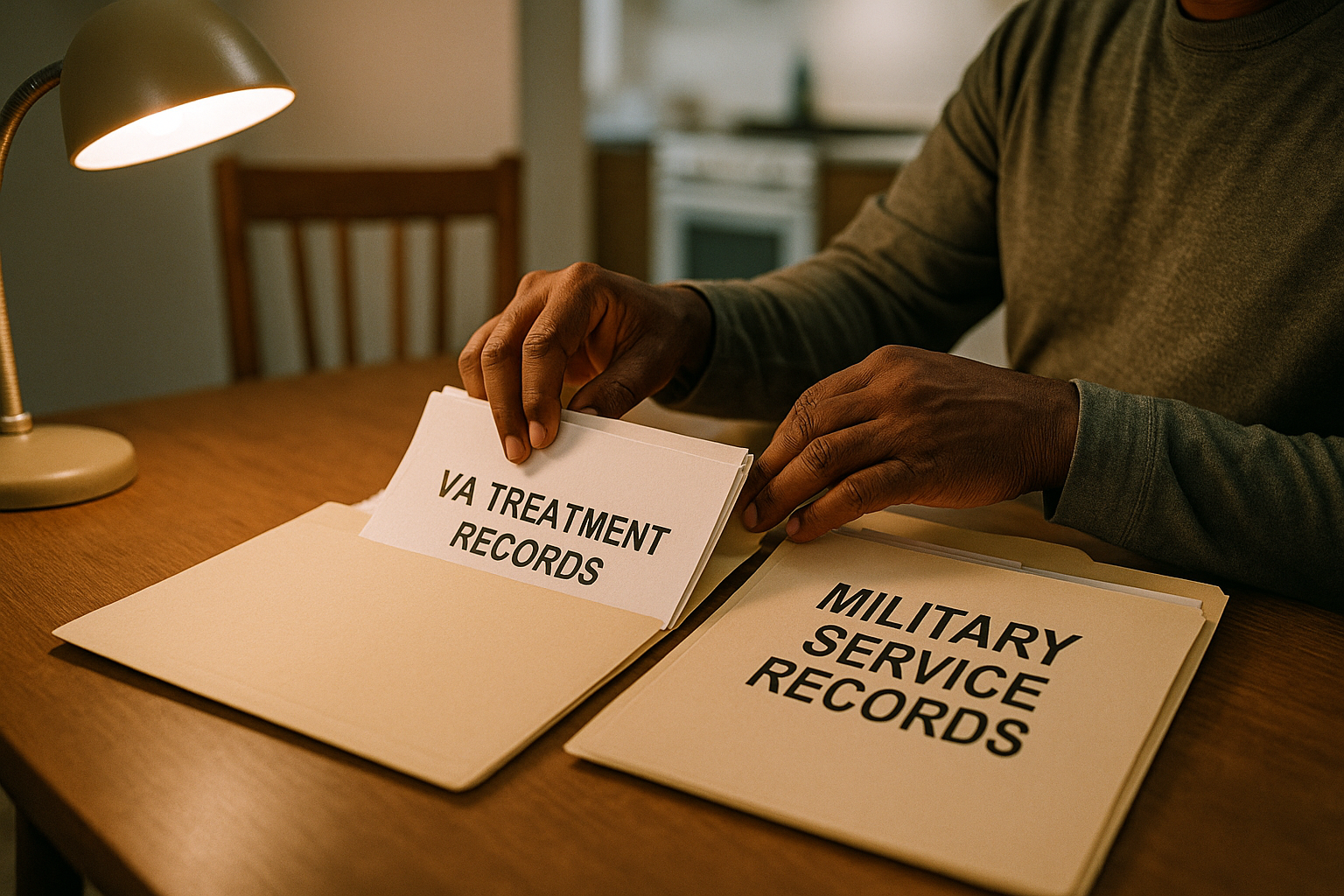
If you have been treated at a VA medical center, your records are sitting in a federal database right now. The VA is required under 38 CFR § 3.159(c)(3) to make reasonable efforts to obtain relevant records from federal facilities -- including VA medical centers -- when you file a claim. But "reasonable efforts" does not mean the VA will always get it right. Knowing how to use your own treatment records as evidence is one of the most practical things you can do to strengthen your claim.
Why VA Treatment Records Matter
VA treatment records carry weight because they come from VA-employed clinicians. When a VA doctor documents your symptoms, diagnoses a condition, or notes a connection to your military service, that documentation becomes part of your claims file. Rating officers are required to consider all evidence of record -- and your treatment records are squarely in that category.
Under 38 CFR § 3.303, service connection requires a current diagnosis, an in-service event or injury, and a medical nexus linking the two. Your VA treatment records can satisfy the first element and sometimes even provide the nexus if a treating physician has documented a connection to your service.
How to Request Your VA Treatment Records
Do not assume the VA will pull every relevant record automatically. Take control of this process yourself.
- MyHealtheVet: Download your Blue Button report at myhealth.va.gov. This gives you VA notes, lab results, imaging reports, and medication history. Select the broadest date range possible.
- VA Form 21-4142 / 21-4142a: Submit these authorization forms with your claim to formally request records from specific VA facilities. List every facility where you have received treatment.
- Request Your C-File: Your claims file contains every document the VA has on your claim. Request it through VA Form 20-10206 to see exactly what the VA has -- and what is missing.
What to Look for in Your Records
Read your records with your claim in mind. You are looking for documentation that supports service connection or a higher rating.
Diagnosis and Symptom Severity
Look for any formal diagnosis matching the condition you are claiming. VA ratings under 38 CFR Part 4 are based on symptom severity. If your records show frequent flare-ups, emergency visits, or worsening function over time, that documentation directly supports a higher rating.
Nexus Language
Sometimes a VA treating physician will write something like "this condition is likely related to the veteran's military service." That language functions as an informal nexus opinion. Flag those entries and reference them in your claim or personal statement.
Not sure where you stand with your VA claim?
Take the free 5-minute Claim Readiness Check and see what to focus on next.
Start the CheckGaps and Unfavorable Entries
Also look for what is missing or contradictory. If a VA examiner wrote that your condition is "less likely than not" related to service, you need to know that before the VA uses it against you. You can address it proactively by obtaining an independent medical opinion.
How to Submit Records Strategically
Do not dump a stack of records into your claim without context. The rating officer may not read every page. Help them connect the dots.
- Write a personal statement that references specific dates and entries from your treatment records. Cite the record by date and facility.
- If a treating physician's note supports your claim, ask that physician to expand on it in a formal nexus letter.
- Organize records chronologically and highlight the most relevant entries.
Avoiding common errors in how you present evidence is just as important as having the evidence. Review the 5 common VA claim mistakes to make sure you are not undermining your own file.
The VA's Duty to Assist -- and Its Limits
Under 38 CFR § 3.159(c), the VA has a duty to assist you in developing your claim. For VA medical records, this means the VA is supposed to retrieve them from its own facilities. But this duty has limits. The VA is not required to search for records it does not know exist. If you were treated at a community care provider through the VA, those records may not be automatically retrieved unless you specifically identify them on your 21-4142.
The duty to assist also does not mean the VA will interpret your records favorably. Use the free VA claim tools to help you organize your evidence and identify gaps before you file.
Bottom Line
Your VA treatment records are not just a medical history -- they are a claims asset. Pull them, read them, and use them deliberately. If you want a complete breakdown of how to build a strong claims file, Win Your VA Disability Claim walks through the entire process step by step. Do not leave your records sitting in a database doing nothing.
Not sure where you stand with your VA claim?
Take the free 5-minute Claim Readiness Check and see what to focus on next.
Start the Check
About FWD Assist HQ
J. Erickson is a veteran and the author behind FWD Assist HQ, writing plain-language guides that help veterans understand their own VA claims. Education, not representation. No hype, no claim sharks. Learn more about the mission.
Educational Content Only: This article is for educational purposes only and does not constitute legal or professional claims advice. If you need help with your VA claim, start by contacting your local Veterans Service Organization (VSO) -- they're free, accredited, and can represent you through the entire process. If your situation requires more specialized support, consider consulting an accredited VA attorney or claims agent.
Get the Complete Playbook
200+ pages of step-by-step VA claim strategies, templates, and 38 CFR citations. Everything you need to file with confidence.
Not sure where you stand with your VA claim?
Take the free 5-minute Claim Readiness Check and see what to focus on next.
Start the Check