Secondary Service Connection: Claim Linked Conditions
"Secondary service connection allows veterans to receive VA disability compensation for conditions that are caused or aggravated by an already service-connected disability. This claim process is governed by 38 CFR 3.310, which outlines the criteria for establishing causation or aggravation."
━━━THE VETERAN'S TAKE━━━
Understanding Secondary Service Connection
Here's the deal: you already have a service-connected disability, but now you're dealing with another condition that developed because of it. That's where secondary service connection comes in, and it's one of the most underutilized tools in the VA disability system.
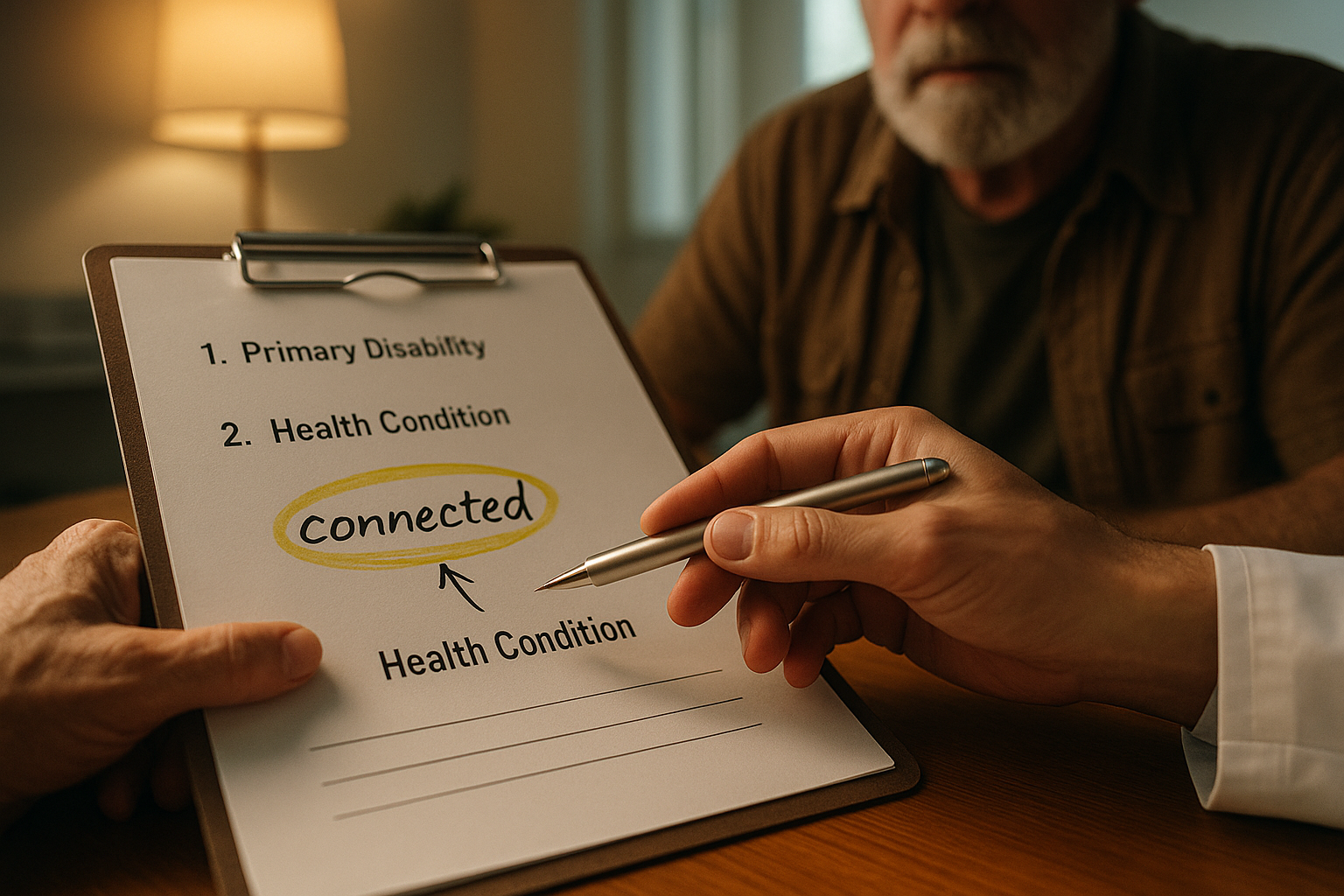
Secondary service connection means the VA will compensate you for a new condition that was either caused by or aggravated by a condition you already have service connection for. This isn't about conditions that happened during service. This is about the domino effect, where one service-connected condition leads to another health problem down the road.
The legal framework comes from 38 CFR 3.310, which breaks this down into two distinct pathways: causation under 38 CFR 3.310(a) and aggravation under 38 CFR 3.310(b). Understanding both gives you more ways to prove your claim.
The Legal Standard: Causation vs. Aggravation
Under 38 CFR 3.310(a), you can establish secondary service connection when your service-connected disability causes a new condition. The regulation requires that the secondary condition be "proximately due to or the result of" your primary service-connected disability. This means there needs to be a clear medical link showing your primary condition directly led to the development of the secondary condition.
The aggravation standard under 38 CFR 3.310(b) works differently. Here, you had a pre-existing condition that wasn't service-connected, but your service-connected disability made it worse beyond its natural progression. The VA must establish a baseline level of severity of the nonservice-connected condition to determine the extent of aggravation.
This distinction matters because many veterans think they need to prove their service-connected condition caused a brand new health problem. Sometimes you just need to show it made an existing problem significantly worse.
Common Secondary Conditions
Let me walk you through the most successful secondary claims I've seen processed:
Sleep apnea secondary to PTSD: PTSD medications can cause weight gain, and PTSD itself disrupts sleep patterns. Both pathways can lead to sleep apnea development. The medical literature strongly supports this connection.
Radiculopathy secondary to back conditions: When you have a service-connected back injury, nerve compression can develop over time, causing radiculopathy in your arms or legs. This follows a clear anatomical pathway that medical professionals can document.
Depression secondary to chronic pain: Chronic pain from service-connected conditions frequently leads to depression. The constant pain cycle, limitations on activities, and reduced quality of life create a medically recognized pathway to depression.
GERD secondary to medications: Many medications for service-connected conditions, particularly NSAIDs for joint and back pain, can cause gastroesophageal reflux disease. This is a well-documented side effect with clear medical causation.
The Evidence You Need
Secondary service connection claims live or die on three pieces of evidence:
Current diagnosis: You need medical documentation showing you currently have the secondary condition. VA medical records work best, but private medical records are acceptable.
Nexus letter: This is your most critical piece of evidence. You need a medical professional to write a letter stating that your secondary condition is "at least as likely as not" caused by or aggravated by your service-connected condition. The doctor needs to explain the medical reasoning, not just state a conclusion.
Documentation of the causal link: This includes medical records showing the timeline of when your secondary condition developed relative to your primary condition, medication records if relevant, and any medical literature supporting the connection.
The nexus letter cannot be generic. It needs to address your specific medical history and explain the biological or medical mechanism connecting your primary and secondary conditions.
How to File Your Claim
Use VA Form 21-526EZ to file for secondary service connection. When you get to the section asking about new conditions, select "new" and list your secondary condition. In the remarks section or in a separate statement, clearly explain that you're claiming this condition secondary to your already service-connected disability.
Be specific about which service-connected condition is causing the secondary condition. If you have multiple service-connected disabilities, identify the primary one creating the problem. You can claim a condition secondary to multiple primary conditions if the medical evidence supports it.
Submit all your evidence with the initial claim. Don't wait for the VA to develop evidence for you. Include your nexus letter, current medical records, and any relevant treatment history.
Critical Mistakes to Avoid
The biggest mistake is filing without a nexus letter. The VA will not develop this evidence for you, and without medical opinion evidence, your claim will likely be denied.
Don't assume the medical connection is obvious. Even when the link seems clear to you, the VA needs a medical professional to explain it. What seems obvious medically often isn't to VA raters without medical training.
Another common error is not considering aggravation when causation might be harder to prove. If you had mild symptoms of a condition before your service-connected disability made it significantly worse, aggravation might be an easier path than trying to prove direct causation.
Finally, don't file secondary claims too early. Wait until you have a clear diagnosis and sufficient medical evidence showing the relationship between your conditions.
Why the Distinction Between Causation and Aggravation Matters
Understanding both causation and aggravation gives you multiple angles to approach your claim. If you can't prove your service-connected condition caused a brand new condition, you might be able to show it significantly worsened a pre-existing condition.
The rating implications are the same. Whether your secondary condition was caused by or aggravated by your service-connected condition, you'll receive the same disability rating based on the current severity of symptoms.
This also affects your effective date. For aggravation claims, the effective date typically goes back to when the aggravation became manifest, which could result in more retroactive compensation.
Take the Next Step
Secondary service connection can significantly increase your overall disability rating and compensation. If you're ready to build a strong secondary claim strategy, check out our comprehensive guide and resources that walk you through the entire process step by step.
This article is for educational purposes only and does not constitute legal advice. For personalized guidance on your VA claim, consult with an accredited VA attorney or claims agent.

About FWD Assist HQ
J. Erickson is a service-disabled Air Force veteran. He served as a military firefighter and as a veteran service officer, where he spent years walking veterans through the same claims process he writes about now. He holds an MBA and writes plain-language guides for veterans who want to understand the system without a translator. Learn more about the mission.
Educational Content Only: This article is for educational purposes only and does not constitute legal or professional claims advice. If you need help with your VA claim, start by contacting your local Veterans Service Organization (VSO) -- they're free, accredited, and can represent you through the entire process. If your situation requires more specialized support, consider consulting an accredited VA attorney or claims agent.
Explore the Upcoming Library
200+ pages of step-by-step VA claim strategies, templates, and 38 CFR citations. Everything you need to file with confidence.
Related Condition Guides
From the VA Condition Library
Cardiovascular / Respiratory
Obstructive Sleep Apnea
Obstructive sleep apnea (OSA) is a condition in which the airway repeatedly collapses during sleep, causing the veteran to stop breathing dozens to hundreds of times per night.
View GuideMental Health
Major Depressive Disorder (MDD)
Major depressive disorder is a clinical diagnosis characterized by persistent depressed mood, loss of interest in activities that once mattered, changes in sleep and appetite, fatigue, difficulty concentrating, feelings of worthlessness, and in severe cases, thoughts of death or suicide.
View GuideMusculoskeletal / Joint
Lumbosacral Strain (Lower Back)
Lumbosacral strain is chronic pain, stiffness, and functional limitation in the lower back caused by injury or overuse of the muscles, ligaments, and soft tissue supporting the lumbar and sacral spine.
View Guide