Secondary Conditions: How to File for Additional VA Disability
"Already service-connected? You may qualify for secondary conditions. Learn what secondary claims are, common examples, and how to file."
━━━THE VETERAN'S TAKE━━━
What Is a Secondary Condition?
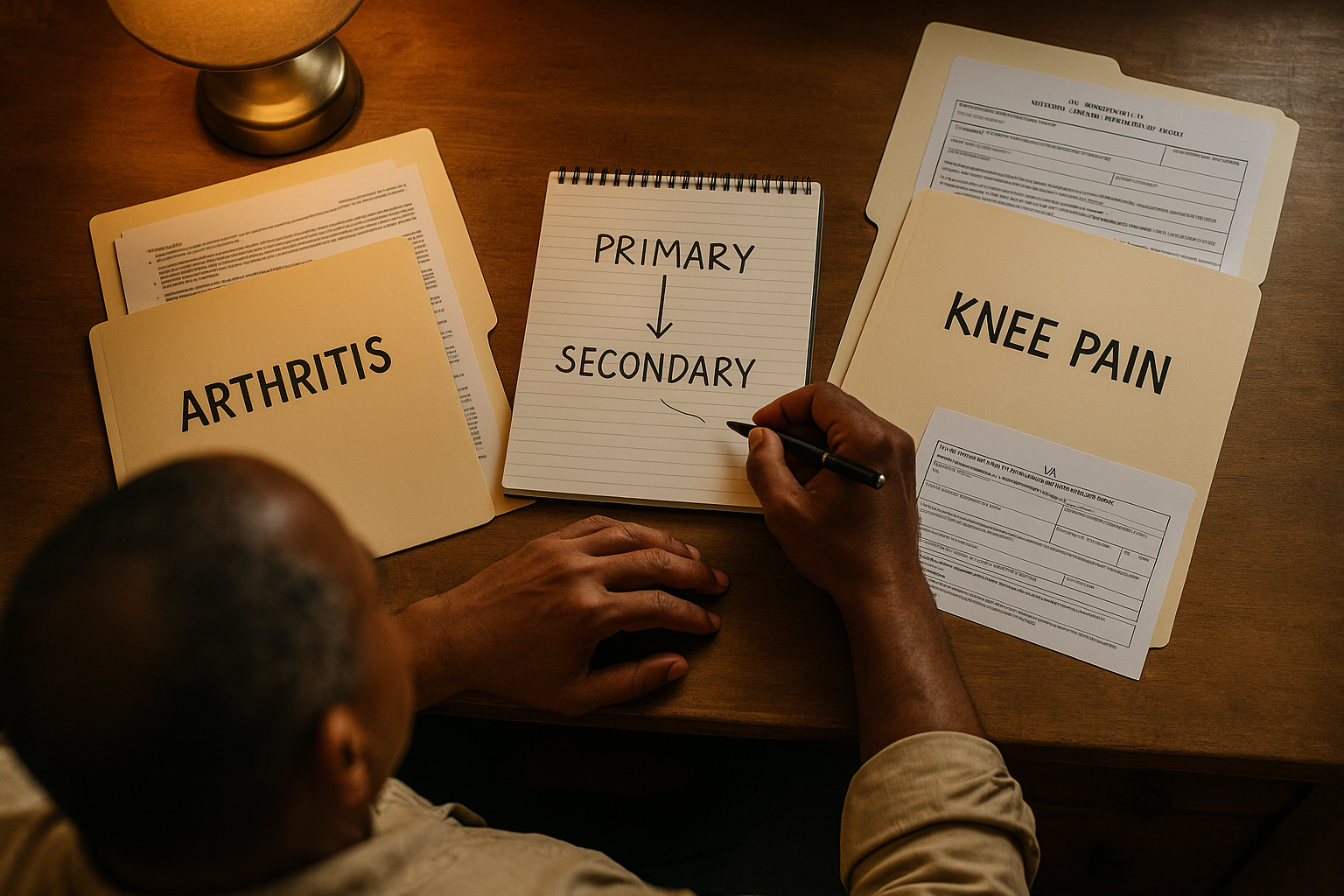
A secondary condition is a disability that was caused by, or made worse by, a condition you're already service-connected for. Under 38 CFR 3.310, the VA must grant service connection for secondary conditions if you can prove the link.
This is one of the most overlooked ways to increase your VA rating.
How Secondary Claims Work
To prove a secondary claim, you need to show:
- A current diagnosis of the secondary condition
- An already service-connected primary condition
- A medical nexus showing the secondary condition was caused OR aggravated by the primary condition
Common Secondary Condition Examples
Mental Health Secondaries
- Depression or Anxiety secondary to chronic pain conditions
- Sleep disorders secondary to PTSD or chronic pain
Musculoskeletal Secondaries
- Opposite knee/hip condition secondary to favoring one leg
- Back condition secondary to altered gait
- Radiculopathy secondary to spine conditions
Other Common Secondaries
- Hypertension secondary to PTSD, sleep apnea, or kidney disease
- Erectile dysfunction secondary to medications or mental health conditions
- GERD secondary to NSAIDs for pain
The Importance of a Nexus Letter
For secondary claims, a nexus letter is often essential. It should state that your secondary condition is "at least as likely as not" caused by or aggravated by your primary condition.
How to File a Secondary Claim
- Get diagnosed
- Get a nexus letter
- File VA Form 21-526EZ (check the secondary claim box)
- Identify the primary condition
- Submit your evidence
The Bottom Line
If you're already service-connected, look at what other conditions you have. Many veterans are living with secondary conditions they could be compensated for.

About FWD Assist HQ
J. Erickson is a service-disabled Air Force veteran. He served as a military firefighter and as a veteran service officer, where he spent years walking veterans through the same claims process he writes about now. He holds an MBA and writes plain-language guides for veterans who want to understand the system without a translator. Learn more about the mission.
Educational Content Only: This article is for educational purposes only and does not constitute legal or professional claims advice. If you need help with your VA claim, start by contacting your local Veterans Service Organization (VSO) -- they're free, accredited, and can represent you through the entire process. If your situation requires more specialized support, consider consulting an accredited VA attorney or claims agent.
Explore the Upcoming Library
200+ pages of step-by-step VA claim strategies, templates, and 38 CFR citations. Everything you need to file with confidence.
Related Condition Guides
From the VA Condition Library
Digestive / Urological
Erectile Dysfunction
Erectile dysfunction is the consistent inability to achieve or maintain an erection sufficient for sexual intercourse.
View GuideMental Health
Sleep Disorders: Non-Apnea (Insomnia, Hypersomnia)
Insomnia and non-apnea sleep disorders are separately ratable VA conditions, often secondary to PTSD, chronic pain, or TBI. Most veterans never file for them.
View GuideCardiovascular / Respiratory
Hypertension (High Blood Pressure)
Hypertension means your blood pressure is consistently elevated above healthy levels.
View Guide