
Military Service Records: Key to a Successful VA Disability Claim
"Your military service records are the foundation of any VA disability claim. Here is exactly how to get them, what to ask for, and what to do if records are missing."
━━━THE VETERAN'S TAKE━━━
Your Records Are the Foundation of Your Claim
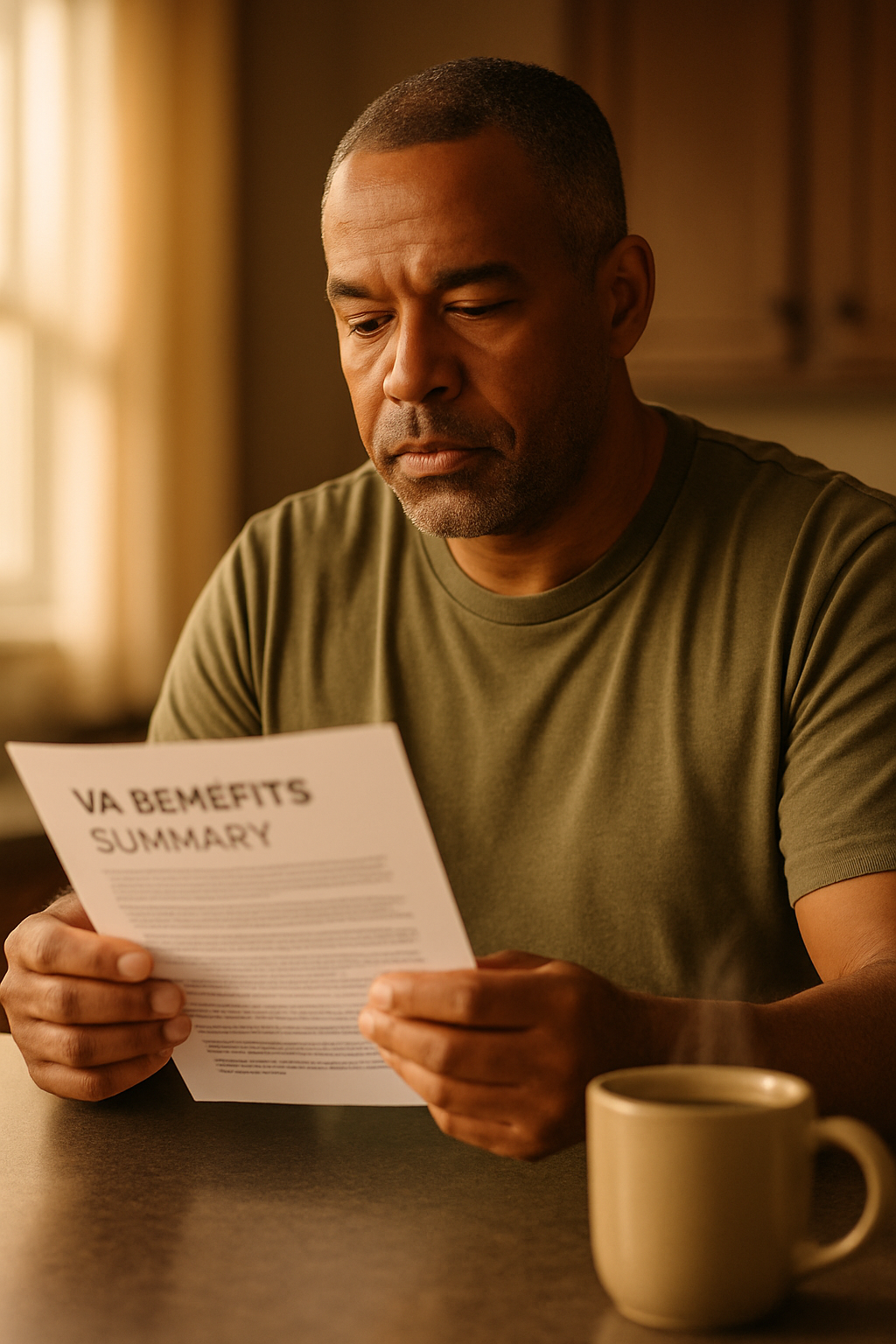
Before filing your VA disability claim, make sure you have your military service records in hand. Don’t assume the VA will handle this for you. Sometimes they try, but gaps happen, records get misplaced, and delays can cost you. The veterans who come prepared with organized records see faster results and better outcomes.
Under 38 CFR § 3.159(c)(1) and (c)(2), the VA has a duty to assist you in obtaining federal records, including your service treatment records (STRs) and personnel file. But that duty has limits. If records are unavailable or the VA cannot locate them, the burden shifts back to you. Get your records yourself, before you file.
What Records You Actually Need
There are two main categories of military records that matter for a VA disability claim:
Service Treatment Records (STRs): Your in-service medical records -- sick call visits, hospitalizations, physical exams, and documented injuries or illnesses. Under 38 CFR § 3.303, direct service connection requires evidence of an in-service event. Your STRs are often the only proof that something happened while you were in uniform.
Official Military Personnel File (OMPF): Includes your DD-214, performance evaluations, awards, and assignment history. Your DD-214 proves your service dates, character of discharge, and military occupational specialty -- all of which affect eligibility and rating decisions.
How to Request Your Records
Option 1: milConnect (Fastest for Recent Veterans)
If you separated after 1994, your records are likely digitized. Log in to milConnect with your DS Logon or CAC. Under “Obtain My Military Records,” you can submit a request for your STRs and OMPF directly. This typically takes two to four weeks.
Option 2: Standard Form 180 (SF-180)
The SF-180 is the official form for requesting records from the National Personnel Records Center (NPRC) in St. Louis. Download it from the National Archives website, fill it out completely, and mail or fax it to the NPRC. Be specific -- check every box that applies: STRs, OMPF, separation documents. Vague requests get vague results. Processing times vary from 10 days to several months depending on backlog.
Option 3: Request Your Records Online with eVetRecs
Use eVetRecs to quickly request your service records from the National Archives. This online tool streamlines the process, making it easier to get the documentation you need. Don’t wait--combine this with your other efforts to ensure your claim is supported by all the necessary evidence.
Not sure where you stand with your VA claim?
Take the free 5-minute Claim Readiness Check and see what to focus on next.
Start the CheckWhat to Do If Records Are Missing
Missing records are more common than most veterans realize. The 1973 NPRC fire destroyed an estimated 16 to 18 million Army and Air Force records. If your STRs are missing or thin, you have options:
Buddy statements: Fellow service members who witnessed your injury can submit lay statements under 38 CFR § 3.303. These carry real evidentiary weight.
Private medical records: Treatment sought off-base or after separation can corroborate in-service events.
Unit records: The NPRC can sometimes locate unit diaries and morning reports that document incidents even when individual records are gone.
One of the 5 common VA claim mistakes veterans make is filing without confirming what records the VA already has in their C-file. Request your C-file through the VA’s FOIA process before or shortly after filing so you know exactly what the rater will see.
Timing Matters: Records and Your Effective Date
Under 38 CFR § 3.400, your effective date is generally the date the VA receives your claim -- not the date you gather your records. File early, even if records are still in transit. You can submit additional evidence after filing. Waiting until everything is perfect costs you back pay.
If you are still on active duty or within 180 days of separation, look into the Benefits Delivery at Discharge (BDD) program. It lets you file before you separate, locking in an earlier effective date. The Win Your VA Disability Claim guide covers the full BDD process and how to build your claim package before you walk out the gate.
Get Organized Before You File
Pull your records, review them, and identify the gaps before you submit anything. Make copies of everything. The free VA claim tools on this site include checklists and trackers to help you organize your records request and build a complete claim file. A disorganized claim is a slow claim, and a slow claim is lost money.
Not sure where you stand with your VA claim?
Take the free 5-minute Claim Readiness Check and see what to focus on next.
Start the Check
About FWD Assist HQ
J. Erickson is a veteran and the author behind FWD Assist HQ, writing plain-language guides that help veterans understand their own VA claims. Education, not representation. No hype, no claim sharks. Learn more about the mission.
Educational Content Only: This article is for educational purposes only and does not constitute legal or professional claims advice. If you need help with your VA claim, start by contacting your local Veterans Service Organization (VSO) -- they're free, accredited, and can represent you through the entire process. If your situation requires more specialized support, consider consulting an accredited VA attorney or claims agent.
Get the Complete Playbook
200+ pages of step-by-step VA claim strategies, templates, and 38 CFR citations. Everything you need to file with confidence.
Not sure where you stand with your VA claim?
Take the free 5-minute Claim Readiness Check and see what to focus on next.
Start the Check