
Board of Veterans Appeals Hearing: How to Prepare and What to Expect
"A Board of Veterans Appeals hearing is your chance to put your case directly in front of a Veterans Law Judge. Here is what you need to know before you walk in."
━━━THE VETERAN'S TAKE━━━
If you have a pending appeal at the Board of Veterans Appeals (BVA), you have the right to request a hearing before a Veterans Law Judge. Most veterans either skip this step because they do not know what it involves, or they show up unprepared. This post breaks down exactly what a BVA hearing is, how to request one, and how to make the most of it.
What Is a BVA Hearing?
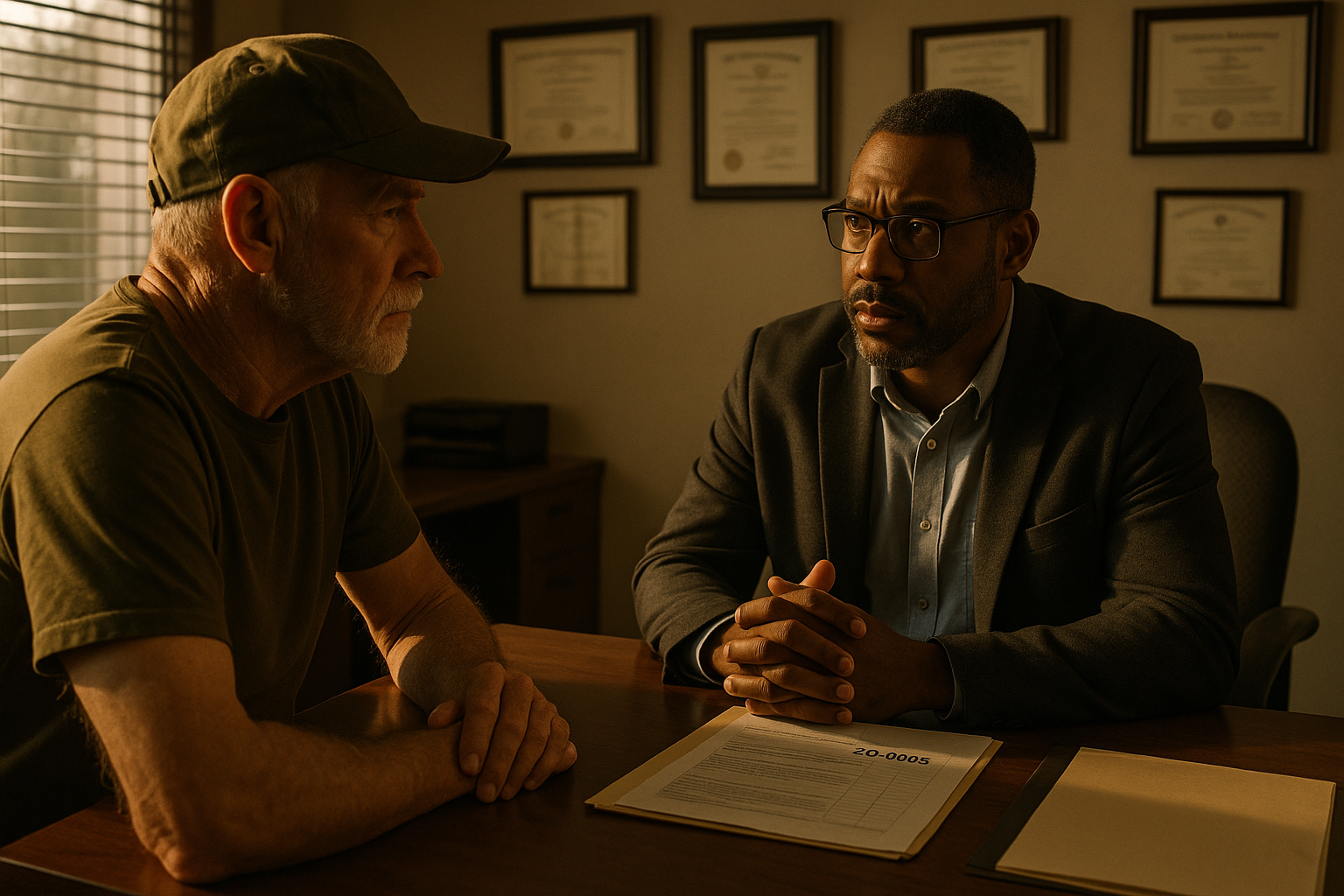
A BVA hearing is a formal proceeding governed by 38 CFR Part 20. You appear before a Veterans Law Judge (VLJ) — either in person in Washington, D.C., by video conference at a regional office, or by telephone — and present testimony in support of your appeal. The hearing is recorded and becomes part of your claims file.
Under 38 CFR § 20.700, you have the right to present testimony, submit additional evidence, and have a representative speak on your behalf. There is no VA attorney arguing against you. It is your opportunity to explain why the evidence supports your claim.
Hearing Options Under the AMA
Under the Appeals Modernization Act, only the Hearing Request lane on VA Form 10182 gets you in front of a judge. The three formats available under 38 CFR § 20.702 are in-person at the Board in D.C., video conference at your nearest regional office, or telephone. Video conference is the practical choice for most veterans — same VLJ, same record, no travel cost.
Under 38 CFR § 20.704, you can submit additional evidence at the hearing or within 90 days after it closes. This is a critical window. If you have a nexus letter, a private medical opinion, or buddy statements not already in your file, get them in during this period. Evidence submitted after the window closes cannot be considered by the Board on that appeal.
How to Prepare: The Practical Steps
Know Your File Before You Walk In
Request your complete claims file before the hearing. You need to know what evidence the VA has, what the rating decision said, and where the gaps are. If the VA denied you because of a weak nexus or a bad C&P exam, address that directly in your testimony. Walking in without knowing your file is the single biggest mistake veterans make at BVA hearings.
Not sure where you stand with your VA claim?
Take the free 5-minute Claim Readiness Check and see what to focus on next.
Start the CheckIdentify the Legal Theory
Every appeal has a legal theory — the specific reason the VA got it wrong. Common theories include: the C&P examiner's opinion was inadequate under 38 CFR § 3.159(c)(4); the VA failed its duty to assist; the rating criteria under 38 CFR Part 4 were misapplied; or the effective date was wrong under 38 CFR § 3.400. Know your theory before you testify.
Prepare Your Testimony
Focus on the functional impact of your condition — how it affects your ability to work, sleep, and perform daily activities. The rating criteria in 38 CFR Part 4 are built around functional impairment. If you have a back condition rated under Diagnostic Code 5242, the VLJ needs to hear about your range of motion, your pain on movement, and how often you are incapacitated. Specific, concrete details matter more than general statements.
Line Up Your Evidence Early
The 90-day post-hearing window is your last chance to submit evidence before the Board decides. If you need a private medical opinion, start that process before the hearing — independent medical experts can take weeks to produce a report. The Appeals Playbook covers how to build a strong evidentiary record for BVA review, including what VLJs look for in medical opinions.
Get a Representative
You are not required to have a representative, but having an accredited VA attorney, claims agent, or VSO at your hearing improves your odds. A good representative knows how to frame the legal argument and strengthen your record. Use free VA claim tools to find accredited representatives in your area.
Common Mistakes to Avoid
- Minimizing your symptoms. Describe your worst days, not your average days. The VA rates based on the full picture of your disability.
- Going off-topic. Stay focused on the specific issues on appeal. Address each condition separately and clearly.
- Missing the 90-day window. Evidence submitted late cannot be used by the Board on that appeal — only in a future Supplemental Claim.
After the Hearing
The Board can grant your appeal, deny it, or remand it back to the regional office for additional development. A remand is not a denial — it means the Board found a procedural deficiency and is sending the case back for correction. If the Board denies your claim, you have 120 days to appeal to the U.S. Court of Appeals for Veterans Claims (CAVC). For a deeper look at the full claims and appeals process, Win Your VA Disability Claim walks you through each step with practical guidance.
A BVA hearing is not a formality. It is a real opportunity to change the outcome of your appeal. Prepare like it matters — because it does.
Not sure where you stand with your VA claim?
Take the free 5-minute Claim Readiness Check and see what to focus on next.
Start the Check
About FWD Assist HQ
J. Erickson is a veteran and the author behind FWD Assist HQ, writing plain-language guides that help veterans understand their own VA claims. Education, not representation. No hype, no claim sharks. Learn more about the mission.
Educational Content Only: This article is for educational purposes only and does not constitute legal or professional claims advice. If you need help with your VA claim, start by contacting your local Veterans Service Organization (VSO) -- they're free, accredited, and can represent you through the entire process. If your situation requires more specialized support, consider consulting an accredited VA attorney or claims agent.
Get the Complete Playbook
200+ pages of step-by-step VA claim strategies, templates, and 38 CFR citations. Everything you need to file with confidence.
Not sure where you stand with your VA claim?
Take the free 5-minute Claim Readiness Check and see what to focus on next.
Start the Check